Processor platform
Define the intended CPU family and use case.
Translate processor platform, form factor, memory, expansion and interface requirements into a reviewable motherboard program for system builds or distribution.
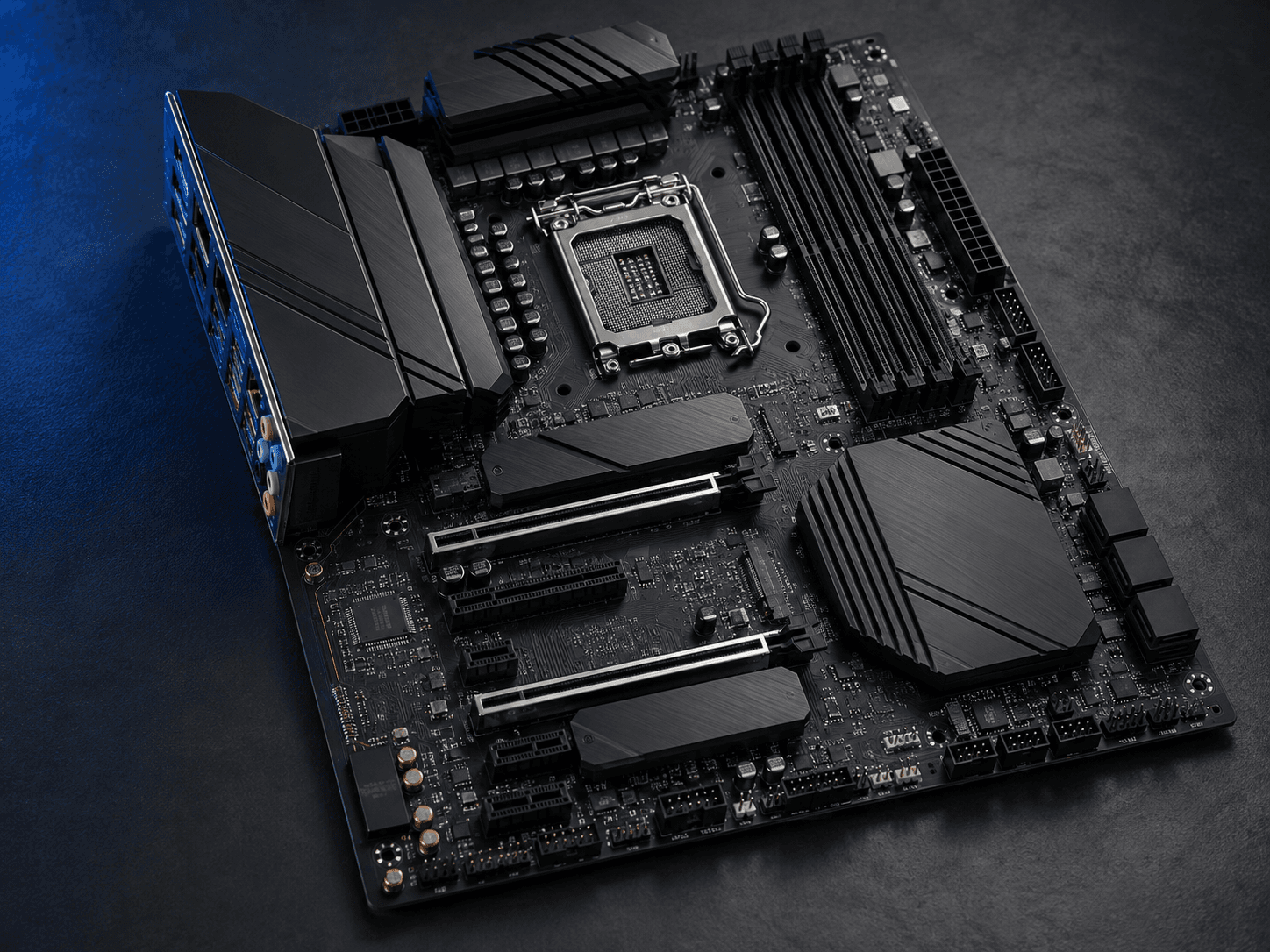
Define the intended CPU family and use case.
Align board dimensions with the enclosure and assembly.
Confirm generation, layout and capacity direction.
Map graphics, storage and peripheral requirements.
List required ports, headers and connectivity.
Identify boot, configuration and validation expectations.
The board defines many downstream choices. A clear motherboard requirement gives graphics, storage, power, chassis and cooling teams a common reference for installation preparation and sample validation.
| Platform | Processor family, chipset direction and intended workload |
|---|---|
| Mechanical | Board form factor, mounting layout and chassis compatibility |
| Memory | Generation, slot count, capacity and validation direction |
| Expansion | PCIe slots, storage interfaces and peripheral requirements |
| Connectivity | Rear ports, internal headers, network and audio direction |
| Validation | Boot, interface, sample configuration and agreed functional checks |
A project can define checks for model identity, appearance, boot behavior, interfaces, slot recognition and packaging. Firmware or component changes should be disclosed and reviewed against the agreed configuration.
Explore factory capabilities
Align the application, specification, quantity, destination and commercial priorities.
Prepare a direction around compatibility, available options and the requested presentation.
Review the product in the intended system, installation workflow and market context.
Use the approved requirement to define relevant product, labeling and packing checkpoints.
Confirm quantity, model reference, packaging, carton information and required documents.
Include processor platform, form factor, memory, storage, expansion, I/O, network, quantity, destination and any firmware or branding needs.
Form-factor options depend on the available platform. State the enclosure and system constraints so suitable directions can be reviewed.
List required boot settings, device support and configuration behavior, then validate them on the approved sample.
Yes. A combined brief can include graphics cards, power supplies, chassis and cooling to support system-level review.
Any material change should be communicated, checked against the approved requirement and accepted before volume use.