B2B BUYER’S GUIDE
How to Source Graphics Cards for B2B PC Programs
Source graphics cards against a documented application, approved configuration and delivery plan. A model name and a unit price are only the beginning of a repeatable PC program.
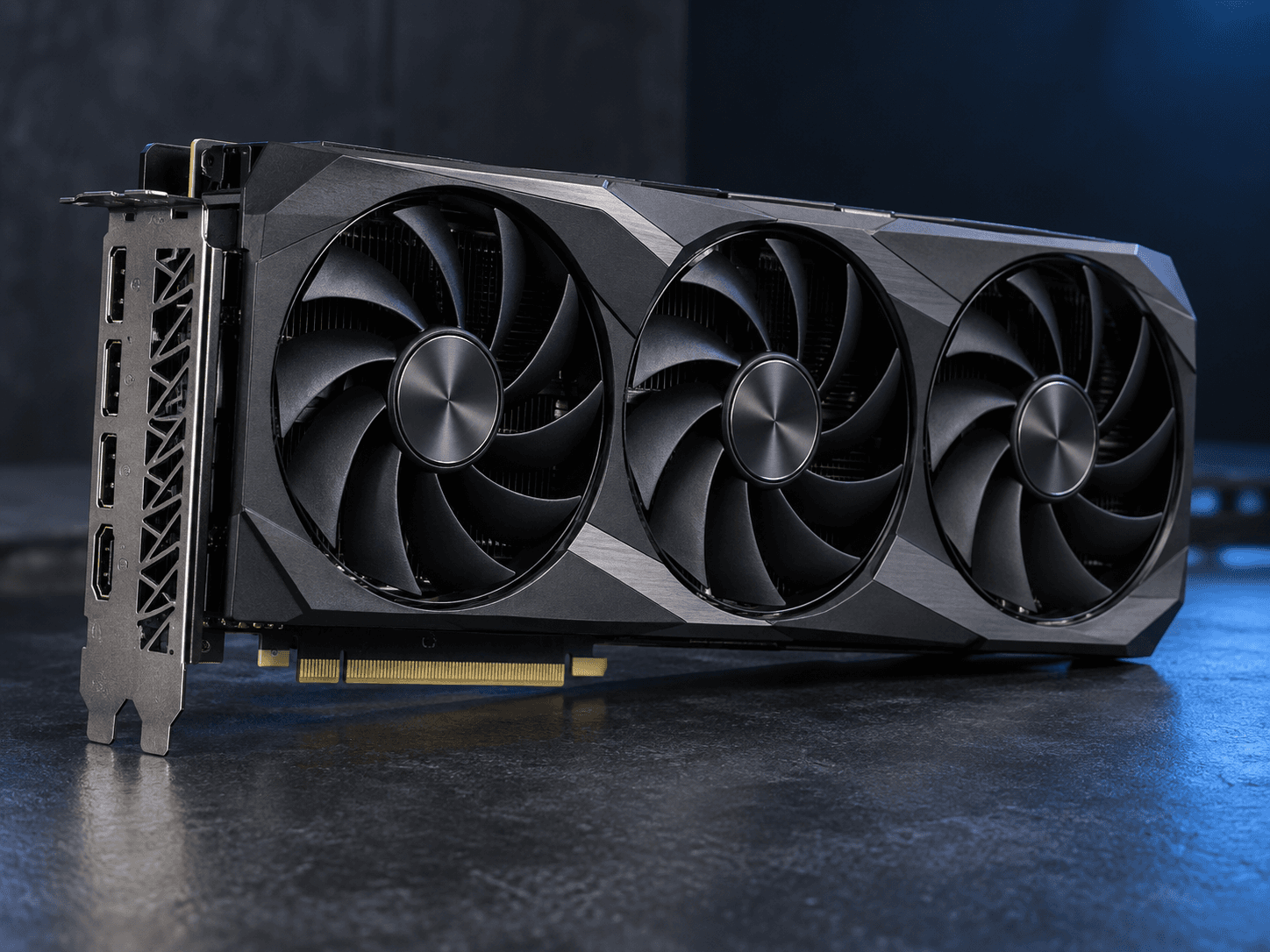
Editorial illustration. Not a photograph of an actual Hekut test or shipment.
Introduction: what makes wholesale GPU sourcing different?
Wholesale graphics card sourcing is the process of selecting, approving and purchasing graphics cards for resale or system integration under agreed technical and commercial conditions. The important difference from a personal purchase is repetition. A card must work in the first demonstration system, but the buyer also needs subsequent deliveries to match the approved design, accessories and support arrangement. A favorable benchmark cannot compensate for inconsistent configurations or unclear replacement terms.
This guide is written for PC brands, distributors, regional assemblers and system integrators. It explains how to move from customer requirements to an actionable request for quotation, then to sample approval and shipment release. The procurement examples are illustrative planning exercises, not reports of Hekut customer projects or measured product performance. Exact specifications and market availability should be confirmed for the particular board offered in a quotation.
Translate the application into a buying specification
Start with the computer's job. A multi-display retail installation may prioritize connector availability, display resolution and recovery after a power interruption. A gaming system may prioritize a defined experience at selected resolutions and settings. A creator workstation may depend on application support, video memory capacity and a stable software environment. These are different purchase decisions even when their budgets overlap.
Describe the application software, operating system, monitor configuration, daily operating pattern and expected service life. Ask whether the customer needs a compact system, quiet office operation, simple field replacement or high sustained throughput. Where a software vendor publishes hardware recommendations, attach those requirements to the inquiry. Do not infer application suitability solely from a GPU's broad consumer market position.
Define acceptance before comparing quotations
A useful requirement is observable. Replace 'powerful graphics' with a named application workflow, an agreed test project and a completion criterion. Replace 'supports many monitors' with the monitor count, connector types and simultaneous display arrangement. The purpose is not to promise performance before testing; it is to give suppliers the same problem to solve. That makes price differences easier to interpret and helps avoid an expensive sample round with fundamentally unsuitable products.
Specify the complete board rather than only the GPU
The GPU processor name does not fully identify a graphics card. Board partners can use different coolers, power limits, output layouts, printed circuit boards and physical dimensions. Reference specifications are background information; the offered model's own data sheet and installation instructions govern the purchase. NVIDIA's comparison page explicitly distinguishes reference or Founders Edition specifications from configurations offered by other manufacturers.
Create a controlled record containing the supplier's exact part number, memory configuration, output layout, card dimensions, slot thickness, auxiliary power connectors, accessory list and packaging identity. If branding or labels are customized, include artwork revision and placement. If the offered product changes, the record should change before order approval rather than being reconciled during receiving.
Product condition also belongs in this record. Specify whether the purchase is new, refurbished or another clearly defined condition, and ask what documentation supports that status. Do not rely on ambiguous expressions such as 'original quality.' A buyer selling a new retail system must know whether the sourcing channel and warranty terms support that representation.
Approve the graphics card inside a representative system
Mechanical fit is a system property. Review card length against the chassis with its actual front fans, drive cages and radiator position. Review height with the power cable installed and the side panel closed. Review thickness against neighboring slots, lower expansion cards and the airflow path. A nominally supported card length does not automatically include every internal case configuration.
The power review should identify the exact PSU, the supplied cable set and the installation method required by both manufacturers. Assess the whole computer, including CPU, drives, pumps and peripherals. A graphics card's stated board power is not a complete system power requirement. Avoid substituting modular PSU cables based only on connector appearance.
Use a representative motherboard, BIOS configuration, operating-system image and display set for sample evaluation. Record the versions and settings that affect the result. A sample tested on an open bench may establish basic operation, but it cannot demonstrate temperature or noise behavior inside the customer's finished enclosure. Run the selected workload in the actual configuration when enclosure behavior matters.
Record a reproducible sample decision
Capture sample identity, photographs, configuration details, test conditions, observed behavior and outstanding issues. The buyer and supplier should agree whether approval covers only the product or also a particular packaging and system configuration. Preserve the approved sample where practical. A physical sample is most useful when it can be connected to a written baseline that another person can reproduce months later.
Compare total purchasing cost and supply continuity
Compare quotations using the same quantity, currency, delivery basis, accessory scope and product condition. An inexpensive card with an incomplete cable or packaging scope may create additional receiving and assembly work. A shipment that arrives before the chassis or PSU can also tie up working capital without advancing finished-system deliveries. Total purchasing cost includes these operational consequences.
Ask suppliers to distinguish stock availability, production planning and estimated replenishment. These terms are not interchangeable. A list of units currently offered does not prove a stable repeat supply. For an ongoing PC program, ask which configuration details can be held, which components may change, what notice is available and how alternate models will be approved.
Treat price validity and quantity commitment as explicit commercial fields. Clarify whether an attractive quotation applies to one lot, a mixed assortment or an exact repeatable part number. When lead time is important, work backward from the receiving date to inspection, transport and order-release milestones. Keep reasonable planning contingencies without presenting estimated dates as guarantees.
Keep the customer-facing promise aligned
Check that sales descriptions, product photographs and service commitments match the configuration being purchased. A buyer may approve a hardware change but forget that retail imagery still shows a different cooler or output bracket. Assign responsibility for updating those materials before the alternate ships. This is particularly useful for distributors selling through several channels, where inconsistent product descriptions can create avoidable return requests even when the hardware meets the revised engineering requirements.
| Decision area | Evidence to compare | Risk if omitted |
|---|---|---|
| Application fit | Named workflow and representative sample | Wrong performance or display capability |
| Configuration control | Part number, dimensions and accessories | Silent substitutions during repeat supply |
| Commercial scope | Currency, delivery basis and price validity | Misleading unit-price comparison |
| Continuity | Change notice and alternate approval process | Unplanned system redesign |
| Support | Written claim and replacement procedure | Unbudgeted field-service cost |
Agree factory testing and shipment inspection separately
Factory testing should answer defined functional questions. For a graphics card program, the plan might include identity confirmation, display-output checks, driver recognition and operation under a representative workload. The parties should agree the test environment, duration, sample coverage and treatment of failures. The phrase 'fully tested' is not a sufficient test plan because it does not define what was done.
Shipment inspection addresses the released lot. Depending on the order, it can include quantity reconciliation, visible condition, label matching, accessories, protective packaging and agreed functional sampling. Inspection records should identify the lot and checked units. Photographs should show relevant details, while sensitive serial information should be handled under the agreed disclosure process.
Separate defects from observations. A missing required bracket is an objective nonconformity; a cosmetic preference not included in the specification may require discussion. Agree acceptance and escalation rules before the inspector arrives. Sampling provides information about checked units and the sampling plan; it does not establish that every untested unit is defect free. This distinction keeps release decisions technically honest.
Plan packaging, receiving and warranty handling early
Protective packaging needs to suit the product and distribution route. A bare board moving to an assembly plant has different presentation requirements from a retail card entering a distributor's warehouse. Agree anti-static protection, support against movement, accessory separation, carton strength and pallet arrangement as applicable. Validate packaging using the transport conditions and test procedures agreed for the program.
Receiving teams need more than a packing list. Provide a mapping between purchase-order lines, supplier part numbers, carton identifiers and quantities. Specify how mixed models are separated and whether serial lists are required. If an exception is discovered after arrival, the buyer should be able to isolate affected cartons rather than inspect an entire warehouse unnecessarily.
Warranty responsibility should be written before payment. Define the claim window, required evidence, exclusions, transport responsibilities and available remedies. Distinguish a supplier's commercial warranty from any manufacturer's regional coverage. Ask whether repair, replacement or credit is expected and how replacement configurations will remain compatible with installed systems. Clear terms help both parties calculate real lifecycle cost.
Choose an order structure that fits demand
A forecast is not the same as a purchase commitment. If the program will be released in stages, state the forecast period, planned release quantities and responsibilities for reserved inventory. Ask whether each release must meet a minimum quantity and how a schedule change affects pricing or availability. These details prevent a buyer from assuming that a small first order locks an entire future supply program. They also help the supplier explain what can realistically be reserved.
Evaluate a pilot shipment separately from the full program. Its purpose may be to confirm receiving, assembly instructions and sales presentation rather than to achieve the lowest unit transport cost. Record the pilot's findings and close open issues before the main release. A small pilot cannot demonstrate long-term reliability, but it can reveal missing accessories, unclear labels and installation steps that should be corrected before multiplication across a larger order.
Illustrative procurement example: a regional PC assembler
Consider an illustrative assembler planning 200 mid-tower systems for two retail channels. The first channel wants a compact gaming desktop; the second wants a creator configuration with two particular monitor inputs. The buyer initially asks for one GPU family across both programs to simplify inventory. That proposal is an inventory preference, not yet a validated technical solution.
The procurement team prepares two workload briefs, then checks whether one exact board can satisfy both display and enclosure requirements. It requests a quotation with fixed outputs, dimensions, accessory scope and condition. A sample goes into both representative builds. The gaming system is checked with its actual front-fan arrangement, while the creator system is checked with the required applications and monitors.
If the same board passes the agreed criteria, one controlled SKU may be practical. If it requires a different adapter, cooler arrangement or power cable, the buyer documents the difference and compares the added complexity with a two-SKU plan. The useful outcome is a traceable choice, not a claim that one model is universally best. The purchase order then names the approved configuration, packaging, inspection scope and substitution procedure.
Prepare an RFQ suppliers can answer accurately
Your initial RFQ should contain the product application, target quantity, destination, timing, proposed system configuration, required outputs and any known dimensional limits. Attach drawings or photographs when available. Include the preferred condition, packaging format, branding scope and commercial delivery basis. If the model is not yet selected, explain the constraints rather than requiring a speculative equivalent.
Ask the supplier to separate confirmed facts, proposed options and information still awaiting validation. This is especially useful when customer requirements are evolving. A supplier may offer an appropriate candidate without yet having evidence for the exact workload or enclosure. Marking that status avoids accidental approval by implication and lets the buyer prioritize the next sample check.
Before releasing a repeat order, compare the new quotation with the previous baseline. Check model identity, accessory list, firmware where relevant, labels, packaging and warranty language. A change that appears minor to purchasing can affect assembly or support. For Hekut inquiries, send the application and system constraints through the contact page; its stated Shenzhen factory area is 8,000 square meters, while product-specific capability and testing remain matters to confirm for the proposed order.
Create a change-and-release checklist
Give each required change an owner and a decision date. A marketing team might approve carton artwork, engineering might approve card and cable fit, and purchasing might approve the delivery terms. Without that separation, an email accepting a price can be misread as approval of an unfinished technical configuration. A short release checklist identifies which decisions are complete and which remain conditional. This keeps a sourcing conversation moving without treating unanswered questions as acceptance.
When a proposed replacement arrives, compare its controlled attributes before discussing its price. For example, a different cooler may change slot occupancy while a different output bracket may affect the intended monitors. Record whether the replacement needs a full system trial, a limited fit check or only a document update. The appropriate scope depends on the change; it should be justified rather than automatically repeating every test or automatically skipping validation. After approval, update assembly and receiving instructions together.
Finally, keep the first receiving feedback connected to procurement records. Ask the receiving team whether the carton map was usable, whether accessories matched and whether the production line encountered avoidable installation delays. These observations are not automatically product defects, but they can improve the next RFQ. A sourcing process becomes more reliable when operational evidence changes the next order instead of remaining in an isolated warehouse email.
FAQ: wholesale graphics card procurement
What is the first step when buying graphics cards in bulk?
Write the application and system requirements before asking for prices. Identify software, displays, chassis, power supply, quantity, destination and timing. Suppliers can then quote a defined configuration or explain which details need sample validation.
Should a distributor insist on one GPU model for every PC?
Only if the exact board meets every program's requirements and continuity needs. A shared SKU can simplify inventory, but output differences, enclosure limits or application support may justify separate configurations.
Does a higher memory capacity always make a card better?
No. Memory capacity is one selection factor. Application support, GPU performance characteristics, output capability, physical size, cooling and power requirements must also match the workload. Compare relevant tasks rather than one specification.
Can a supplier substitute a card with the same GPU processor?
The purchase agreement should define this. Cards using the same GPU can differ in size, connectors and cooler design. Require approval when a substitution changes any controlled feature or the representative system baseline.
What should be retained after sample approval?
Keep the approved part identity, configuration record, relevant photographs, test conditions, acceptance decision and packaging details. Preserve a physical sample when feasible and connect later inspection records to the same baseline.
Conclusion: buy a repeatable configuration
A strong wholesale GPU decision connects the customer's task, the complete board, the assembled computer and the delivery process. It also states what remains uncertain and how the uncertainty will be resolved. This is more useful to procurement than an unsupported promise of excellent quality.
Prepare one clear requirements package and use it consistently across quotations, samples and shipment inspection. To discuss a Hekut graphics card program, send your application, quantity, destination and system configuration to info@Hekut.com or use the inquiry page. Ask for a documented candidate and review plan before committing to volume.